From 1941 to 1943, the Nazis forced Krakow’s Jews into a small ghetto in the Podgórze district. Today a quiet walk reveals the memorials and traces of that history.
Quick facts
- Established: March 1941
- Liquidated: March 1943
- Area: Podgórze, south of the Vistula
- Walking time: 1.5–2 hours
History of the ghetto
In March 1941 the German authorities forced around 15,000 Jews into a few streets of Podgórze, later surrounded by a wall shaped like Jewish tombstones. Deportations to Bełżec and other camps followed. The ghetto was liquidated in March 1943; survivors were sent to Płaszów or Auschwitz.
Walking route
- Bernatka footbridge – cross from Kazimierz to Podgórze.
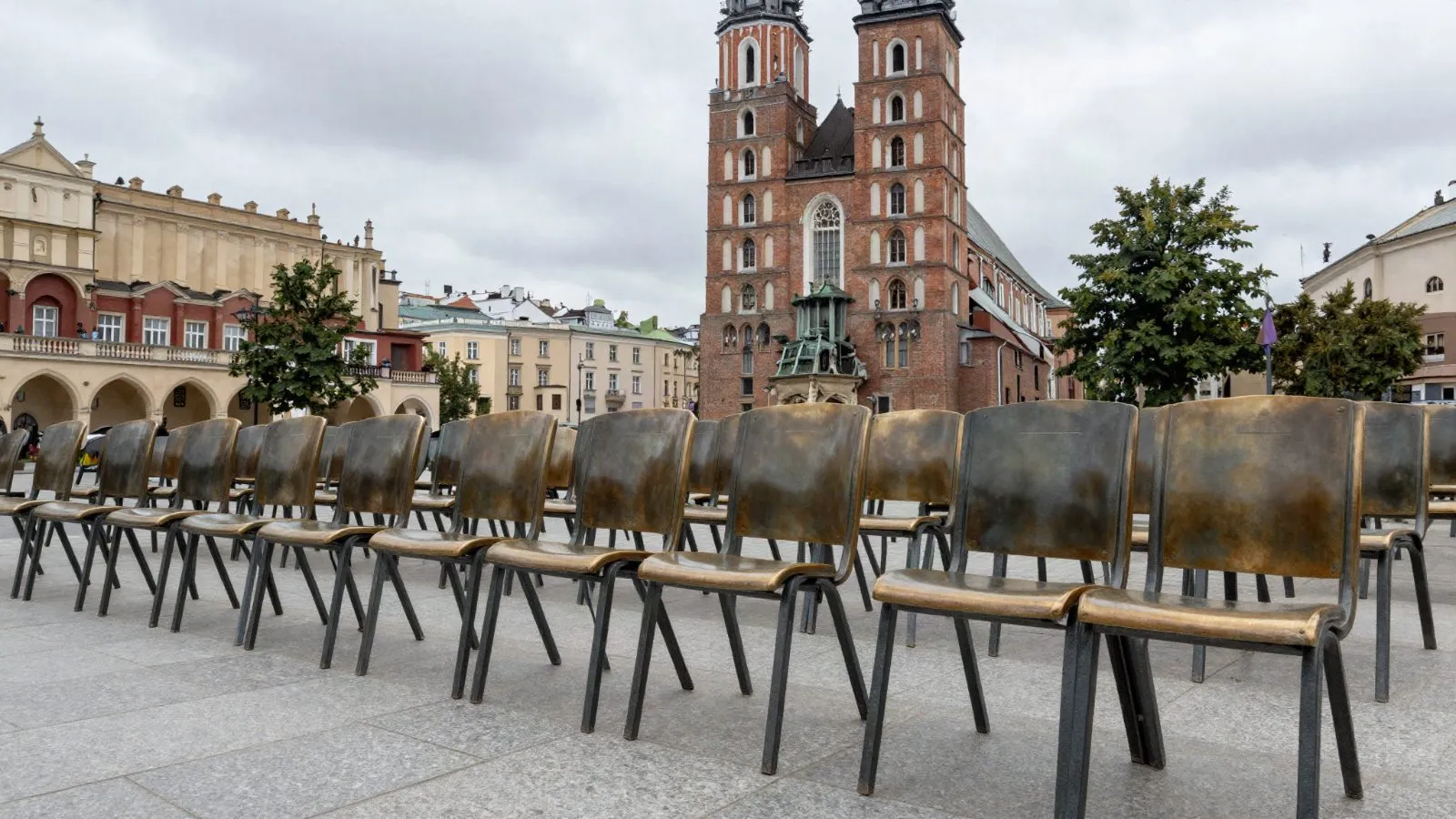
- Ghetto Heroes Square – the memorial of large empty chairs recalls the furniture left behind during deportations.
- Eagle Pharmacy – the pharmacy of Tadeusz Pankiewicz, now a museum.
- Ghetto wall on Lwowska Street – a surviving fragment with a memorial plaque.
- Ghetto wall on Limanowskiego Street – another fragment behind a school.
- Schindler’s Factory – a 10-minute walk east on Lipowa Street.
Visiting respectfully
Podgórze is a residential area today. Keep voices low near memorials and ask before photographing people. Consider joining a guided tour for deeper context, or continue to the Auschwitz-Birkenau Memorial on another day.
Frequently asked questions
Where was the Krakow Ghetto?
In the Podgórze district on the south bank of the Vistula, not in Kazimierz.
Can you still see the ghetto wall in Krakow?
Yes. Two fragments survive, on Lwowska Street and on Limanowskiego Street.
What do the chairs on Ghetto Heroes Square mean?
The empty chairs symbolise the furniture and belongings left behind by Jews deported from the ghetto.