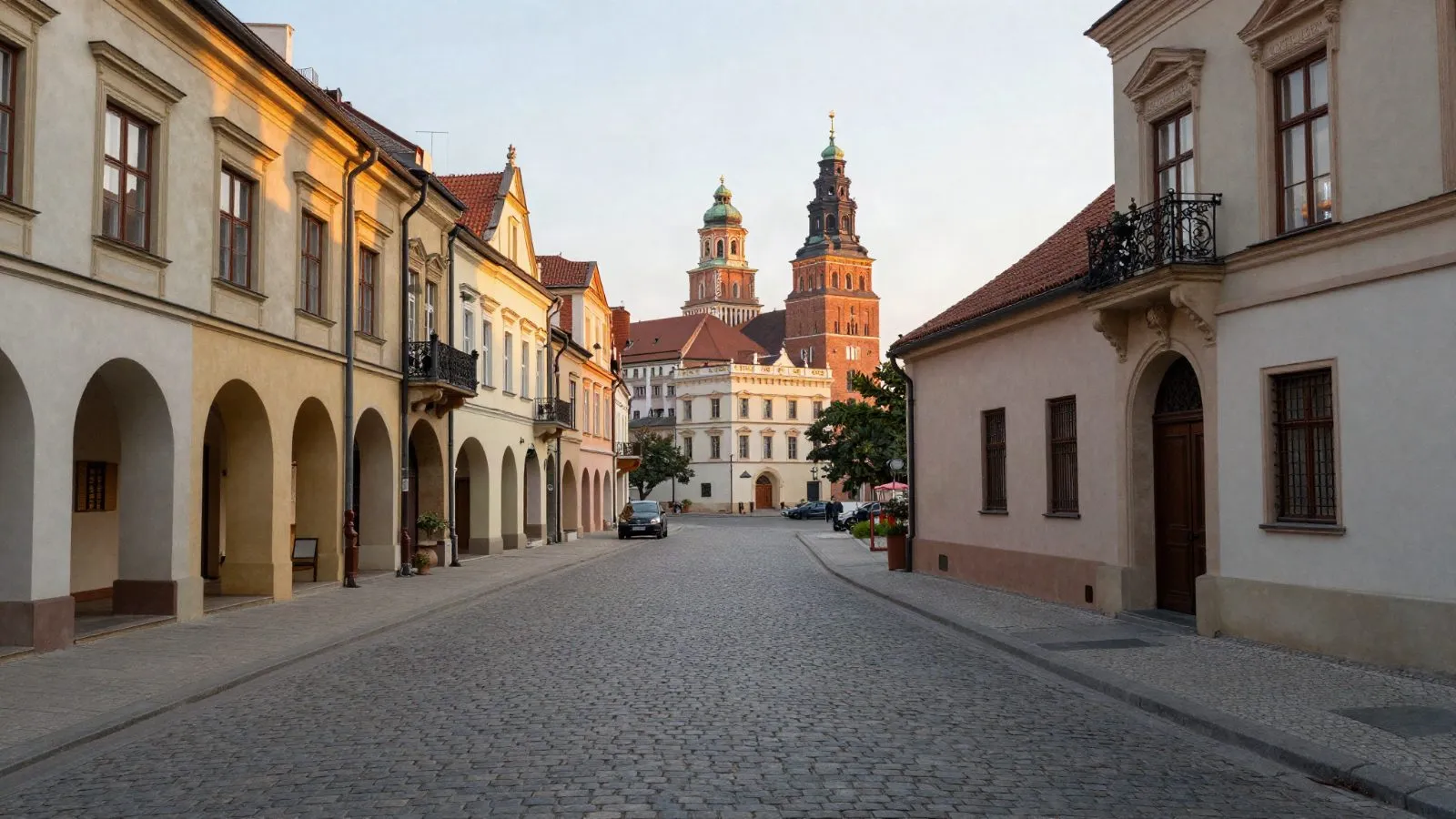
Quiet, cobbled and lined with Gothic and Renaissance houses, Kanonicza leads from the Old Town to Wawel Hill. Many locals call it Krakow’s most beautiful street.
Quick facts
- Where: between Grodzka Street and Wawel
- Named after: the cathedral canons who lived here
- Highlights: historic houses, Archdiocesan Museum
- Best time: early morning or evening
History
Kanonicza takes its name from the canons of Wawel Cathedral, who lived in the grand houses along the street. Their buildings, with stone portals, courtyards and coats of arms, have survived remarkably well.
What to see
- Canons’ houses with Renaissance portals and arcaded courtyards. Peek inside where gates are open.
- Archdiocesan Museum, in houses where Karol Wojtyła, later Pope John Paul II, once lived. See John Paul II’s Krakow.
- Hotel Copernicus, one of the city’s most historic hotels; see luxury hotels.
- Views of Wawel as you reach the end of the street.
How to include it in your walk
Walk down Grodzka Street from the Main Square, turn into Kanonicza by the churches of St Peter and Paul and St Andrew, and follow it to Wawel. This is the most beautiful end to the Royal Route.
Photo tips
- Early morning light and empty cobbles make the best photos.
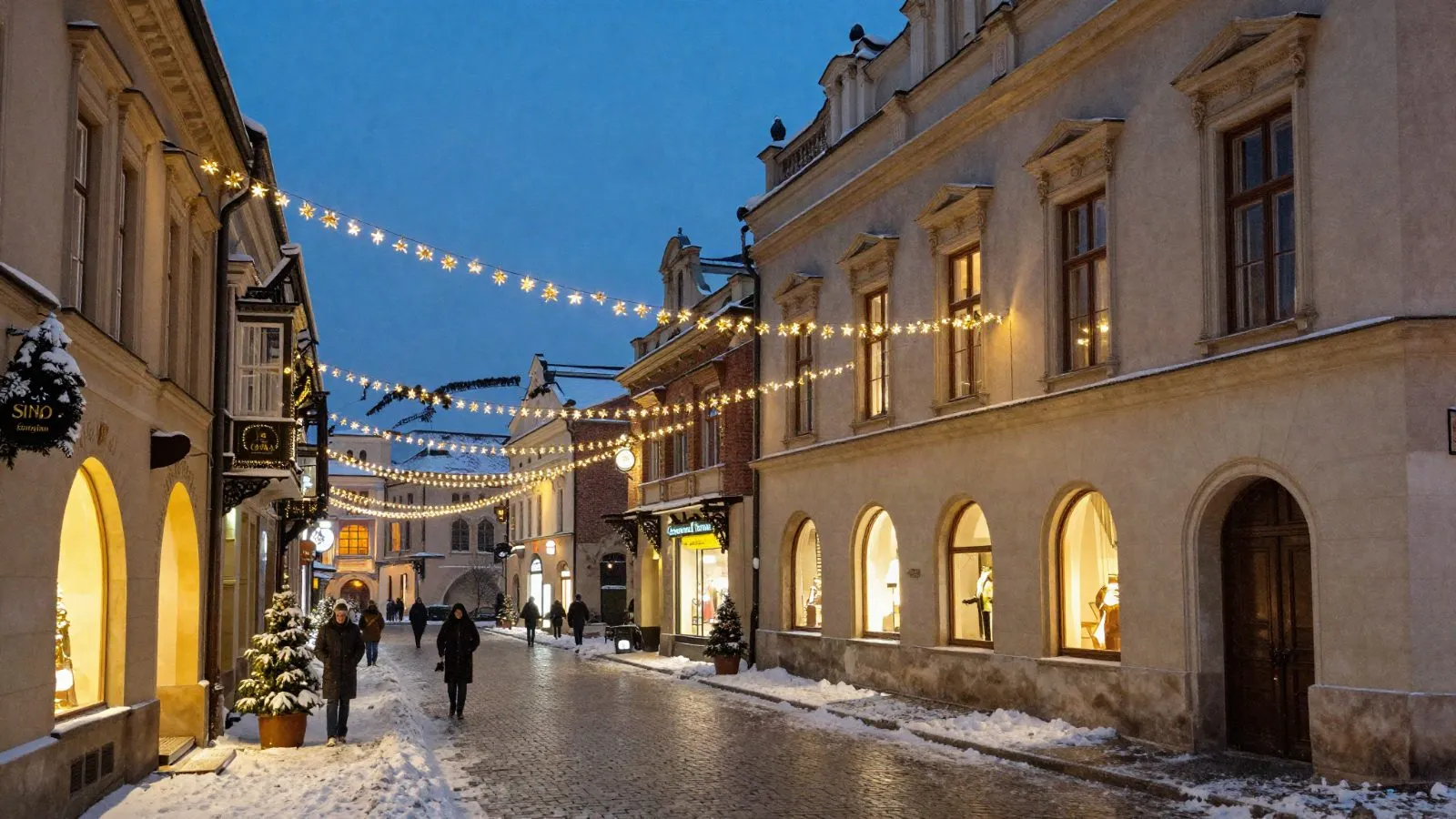
- In the evening, lanterns give the street a romantic glow; see romantic Krakow.
- More ideas in Instagram spots in Krakow.
Frequently asked questions
Why is Kanonicza Street famous?
It is one of the best-preserved historic streets in Krakow, lined with canons’ houses on the way to Wawel.
Did John Paul II live on Kanonicza Street?
Yes, Karol Wojtyła lived on Kanonicza before becoming pope. The houses now hold the Archdiocesan Museum.