Easter is one of the most important holidays in Poland, and Krakow celebrates it with markets, church traditions and two unique local folk festivals.
Quick facts
- Easter market: Main Market Square
- Holy Saturday: blessing of food baskets (święconka)
- Easter Monday: Śmigus-dyngus and Emaus fair
- Tuesday after Easter: Rękawka in Podgórze
The Easter market
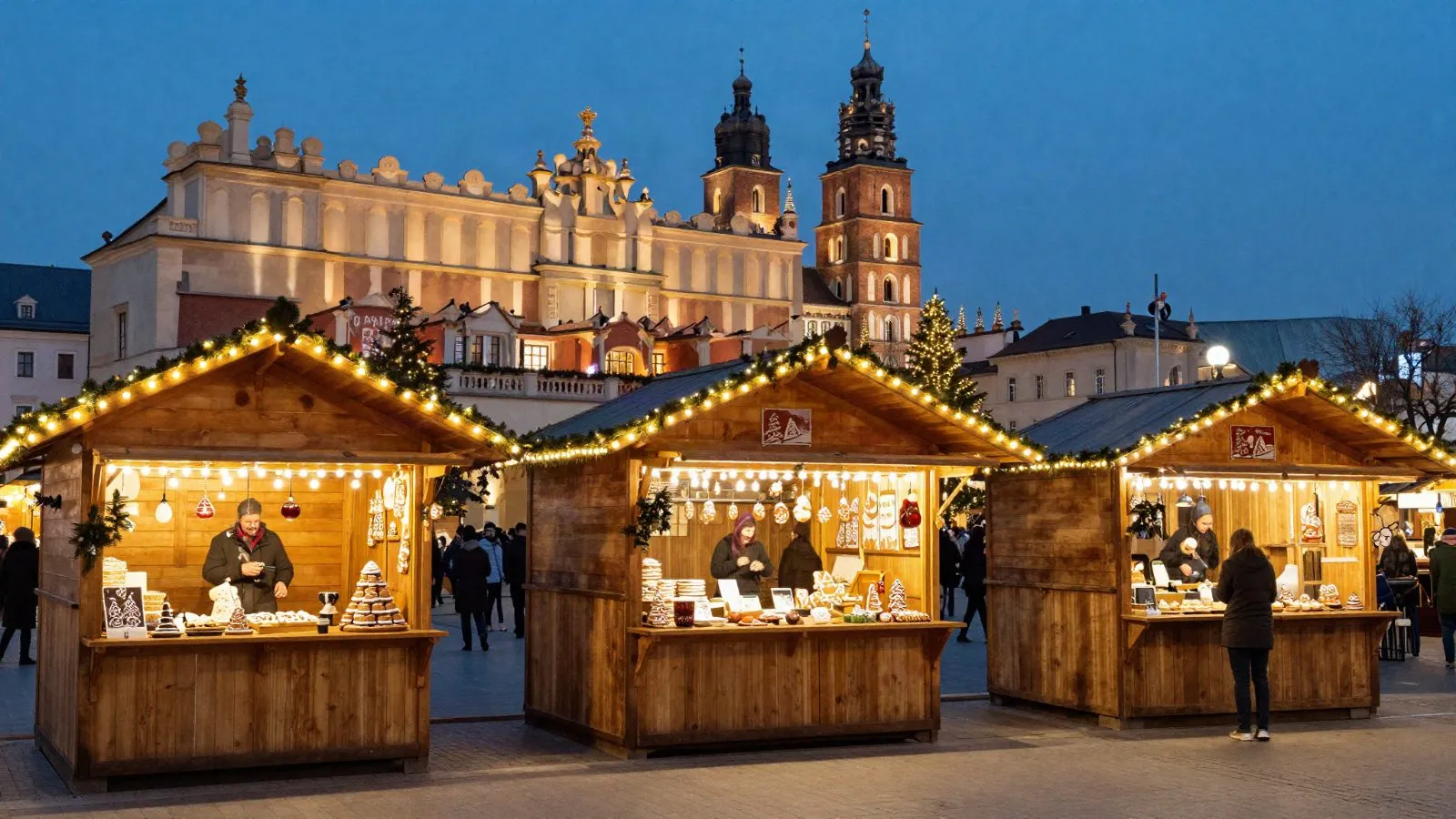
In the weeks before Easter, wooden stalls fill the Main Market Square with painted eggs, palms, folk crafts, sweets and grilled food. It is smaller than the Christmas market but very charming.
Holy Week traditions
- Palm Sunday: colourful palms made of dried flowers and grasses are carried to church.
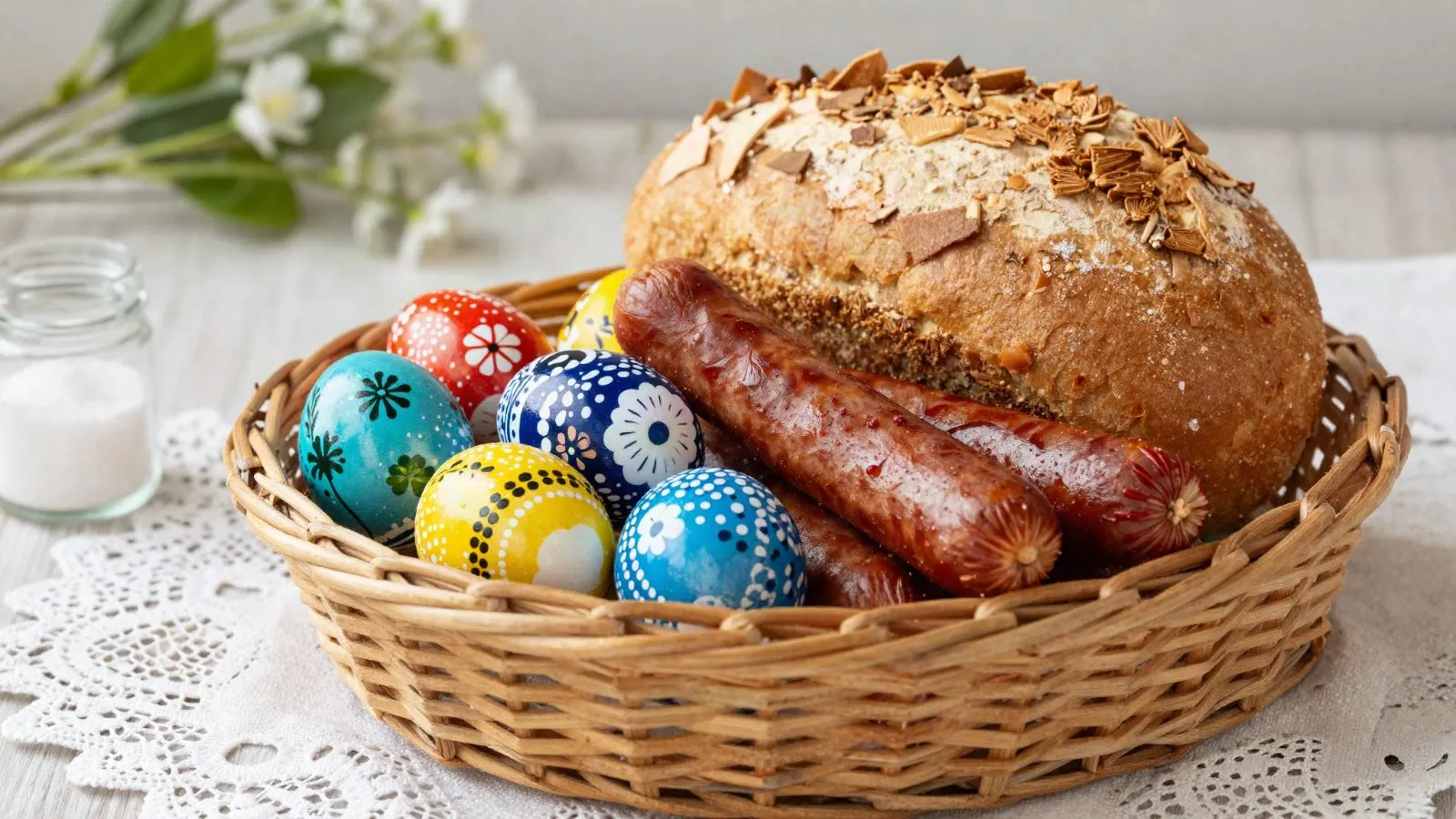
- Holy Saturday: families bring baskets of eggs, bread, salt, sausage and a sugar lamb to church to be blessed. Churches across the city are busy all day.
- Easter Sunday: a family breakfast with the blessed food, żurek soup and cakes such as mazurek and babka.
Śmigus-dyngus
On Easter Monday, people throw water at each other. Children with water pistols may target passers-by, so keep your camera dry.
Emaus fair
On Easter Monday, the Salwator district hosts the traditional Emaus fair, with stalls of toys, sweets and folk crafts on the streets near the Norbertine convent.
Rękawka
On the Tuesday after Easter, the Rękawka festival takes place around Krakus Mound in Podgórze, with historical re-enactors and a medieval atmosphere.
What is open
Easter Sunday and Monday are public holidays, and Holy Saturday afternoon is quiet. Most shops close, and some museums change their hours. Restaurants in the centre are usually open but book ahead. See opening hours in Krakow and Krakow in spring.
Frequently asked questions
Is there an Easter market in Krakow?
Yes, on the Main Market Square in the weeks before Easter.
What is Śmigus-dyngus?
An Easter Monday tradition where people splash each other with water.
Are shops open at Easter in Krakow?
Most shops close on Easter Sunday and Monday, and many close early on Holy Saturday.