Wawel Cathedral is the spiritual heart of Poland – the coronation church of Polish kings and the resting place of monarchs, poets and national heroes.
Quick facts
- Location: Wawel Hill
- Highlights: royal tombs, Sigismund Chapel, Sigismund Bell
- Time needed: 1–1.5 hours
- Dress code: shoulders and knees covered
History
The present Gothic cathedral was consecrated in 1364, but a church has stood here since the 11th century. Almost all Polish kings were crowned here, and most are buried in its chapels and crypts.
What to see inside
- Shrine of St Stanislaus – a silver coffin under a baroque canopy in the centre of the nave.
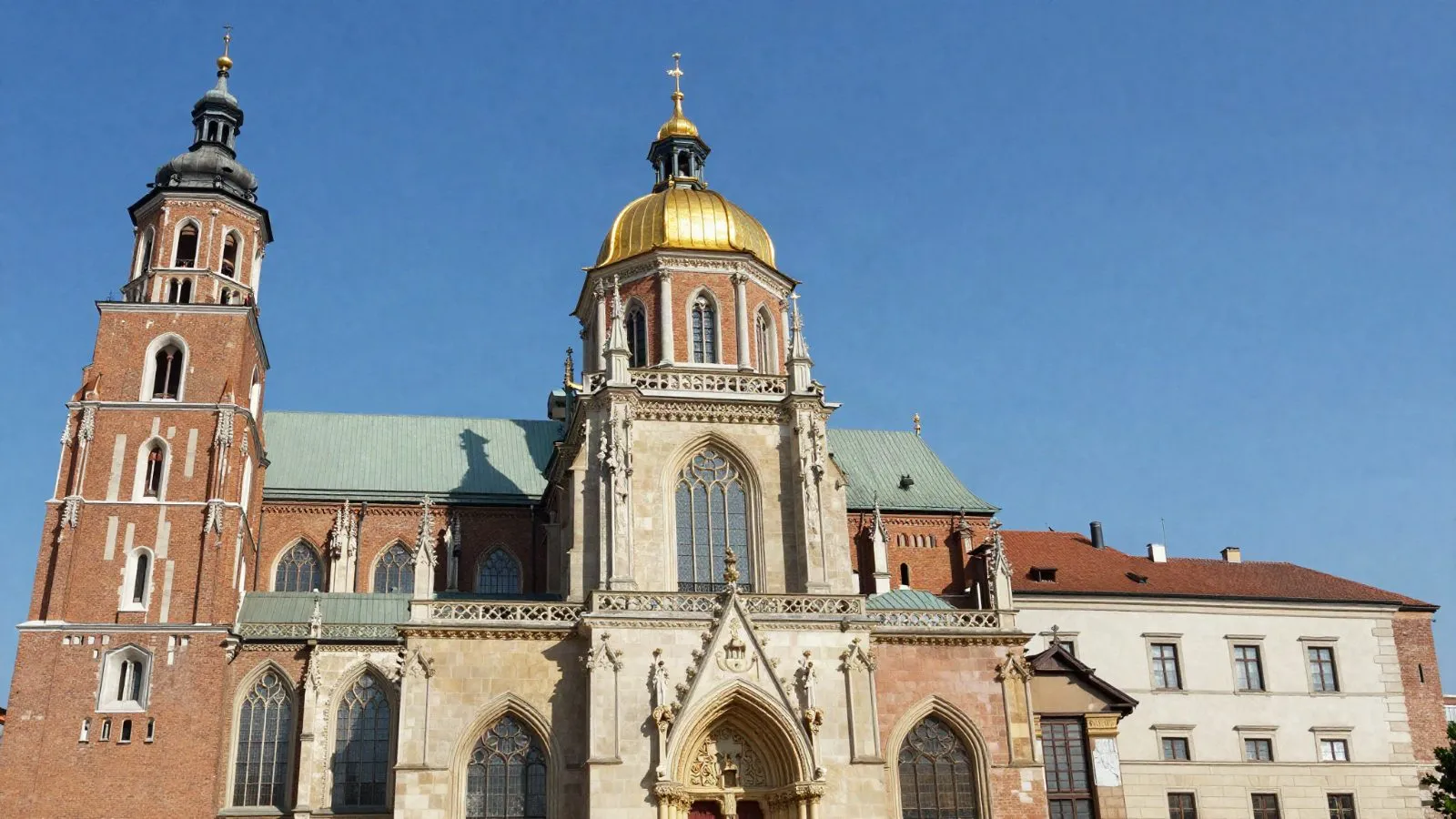
- Sigismund Chapel – a masterpiece of the Italian Renaissance north of the Alps, with a gilded dome visible from outside.
- Royal crypts – tombs of kings, as well as national heroes such as Tadeusz Kościuszko and Józef Piłsudski.
- Poets’ crypt – resting place of Adam Mickiewicz and Juliusz Słowacki.
The Sigismund Bell
Cast in 1520, the Sigismund Bell weighs almost 13 tonnes and rings only on major religious and national occasions. You can climb the narrow wooden stairs of the tower to see it up close. Legend says that touching its clapper with your left hand brings luck in love.
Tickets and opening hours
Entry to the main nave is generally free, while a ticket covers the bell tower, royal tombs and the Cathedral Museum. Tickets are sold near the cathedral entrance. The cathedral is closed to tourists during Masses on Sunday mornings. Castle exhibitions need separate tickets – see Wawel Castle tickets.
Frequently asked questions
Is Wawel Cathedral free?
Entry to the main part of the cathedral is usually free; a ticket is needed for the royal tombs, the Sigismund Bell and the museum.
Can you climb to the Sigismund Bell?
Yes, with a cathedral ticket. The stairs are steep and narrow, so it is not suitable for everyone.
Who is buried in Wawel Cathedral?
Most Polish kings, plus national heroes and poets including Kościuszko, Piłsudski, Mickiewicz and Słowacki.